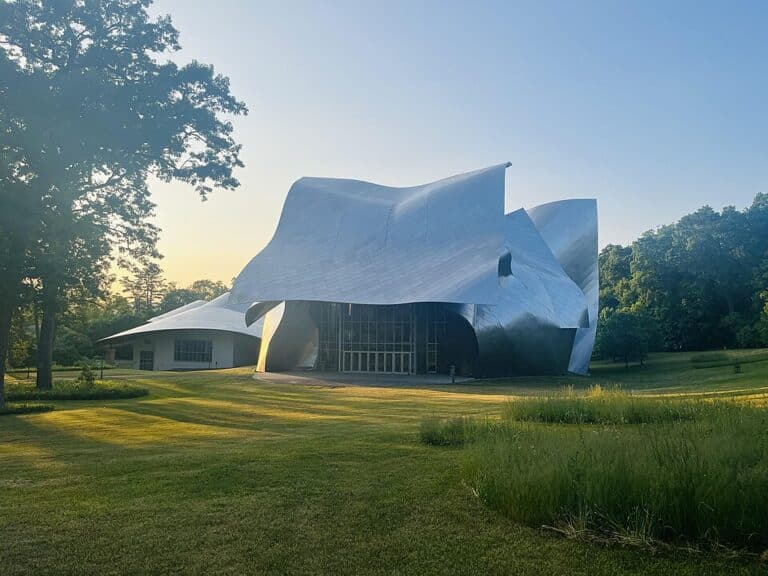
The best universities for music production in California include the University of Southern California, San Diego State University, Loyola Marymount University, and UC San Diego.
These schools have a wide range of selectivity; USC is the most selective music production program in the US, accepting less than 5% of applicants. The other schools, however, have higher acceptance rates and different admission criteria.
The best conservatories for music production in California include the California Institute of the Arts, the San Francisco Conservatory of Music, and the Los Angeles College of Music.
These are fantastic options if you want to focus wholly on the arts, or if your grades are not quite up to par for admission to academically competitive universities like USC or UC San Diego.
In my practice, I have noted that California is one of the most desirable places to study music production among my students, and it makes sense. Young producers wish to start building their networks, connections, and “make it” in a big city like Los Angeles while still in college. The approach certainly has merit.
Let’s discuss which programs in California have the best music production schools, their application deadlines, what makes them special, and what you may need for admission.
University of Southern California Thornton School of Music
Los Angeles, CA
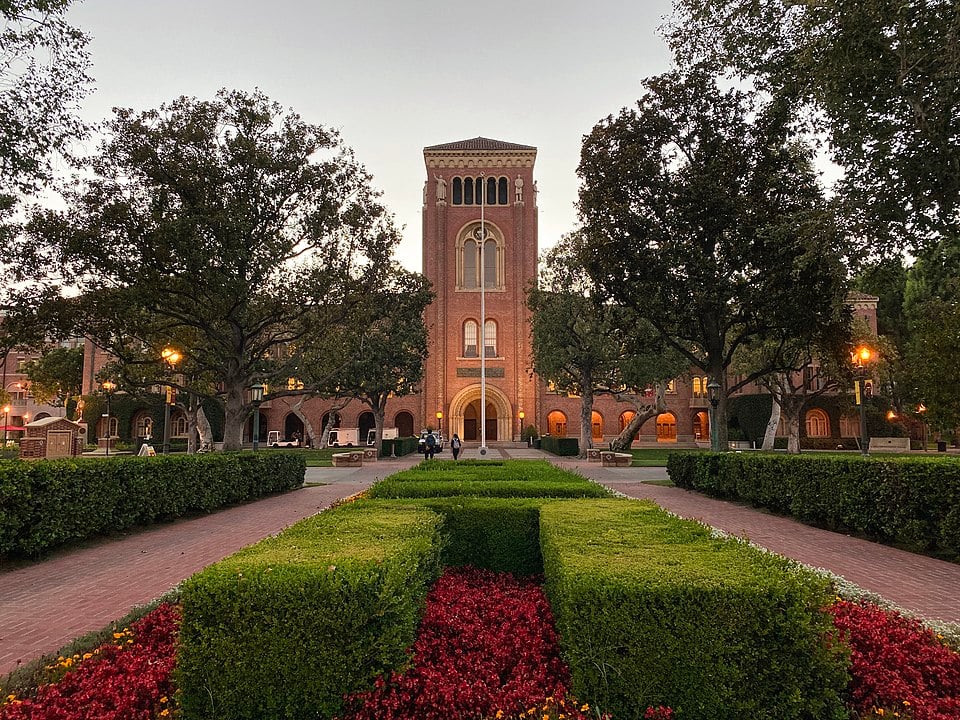
The Most Selective Option: USC Thornton School of Music
If we’re just looking at exclusivity, then the Thornton School of Music at the University of Southern California should be the top choice for future producers and engineers.
Thornton Music poses the toughest barrier to entry of any school on this list, admitting fewer than 5% of the 400 applicants who apply each year. Moreover, applicants must go through two rounds of auditions. Those demands match any put upon a traditional musician at a top-level conservatory.
Intimidating as the number might be, there’s a reason so many people flock to Thornton Music. Thornton has state-of-the-art equipment and an excellent faculty, exactly what students need to succeed in the industry.
Faculty at Thornton includes Michael “Smidi” Smith, an Emmy-nominated producer and songwriter who has worked with Outkast, Kylie Minogue, and Giorgio Moroder.
In addition to teaching at Thornton and playing with Tears for Fears, Doug Petty has produced award-winning records for artists such as Shawn Colvin and Audra McDonald.
How to Get Accepted
There are several components to the USC music production application, the most important one being an original portfolio of music.
There are other components, including spoken-word videos that address questions USC asks, including one where you have to showcase your home studio.
Don’t worry – they’re not looking for a professional-grade home studio. They want to see your instruments, laptop, speakers, etc., and how you use them when making music.
If you pass the prescreening round of your portfolio, which very few students do, you’ll be invited on campus to do a MIDI sequencing exercise they give you, as well as an interview.
Application Deadline
December 1st is the USC Thornton School of Music deadline for all programs.
There is zero flexibility with USC’s deadline; you’ll want to ensure you have all apps in by this date, as they don’t allow late applications.
California Institute of the Arts
Valencia, CA
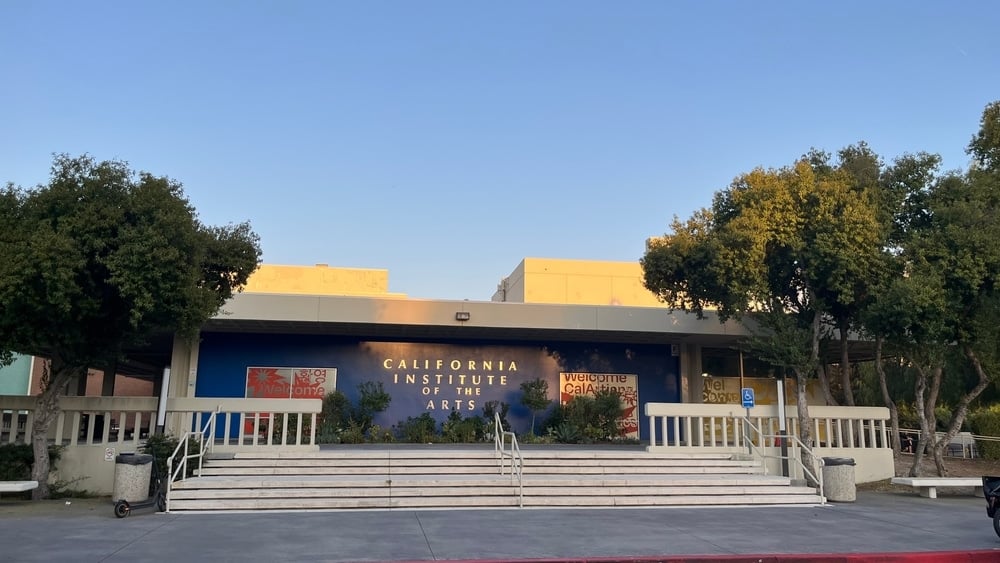
Pushing the Boundaries of Contemporary Music
The California Institute of the Arts is legendary for its filmmaking and animation programs, but don’t let that fool you. CalArts also has a music production program focused on contemporary musical styles.
The program nowadays best suited for most music producers is called “Experimental Pop,” or Expop for short, as they call it at the school.
This is a program designed for people who want to make contemporary music; think producers, songwriters, and musicians who want to experiment with pushing the limits of popular music.
Students at CalArts can explore these new horizons by working with one of the school’s digital performance ensembles. The Machine Orchestra integrates laptops, robotics, and traditional instruments to create never-before-heard soundscapes. The Creative Electronic Ensemble brings the principles of jazz and improvisation to electronic music.
All of these ensembles give future producers and engineers opportunities to develop their skills.
CalArts’ overall acceptance rate is pretty low – just 25%. Expop is among the school’s more desirable “specializations,” CalArts’ term for majors.
What It Takes for Admission
One significant part of admission into CalArts is the “Artist Statement,” where you have to write a 500-word essay about your musical background, goals, and why you would like to attend CalArts.
Specificity is key here; being specific about exactly what interests you about CalArts is important for standing out.
Additionally, the program requires a portfolio of original work for admission, which should include works in a more contemporary and experimental vein.
Application Deadline
December 1st is the priority deadline for CalArts.
January 5th is the final deadline for CalArts.
San Francisco Conservatory of Music
San Francisco, CA
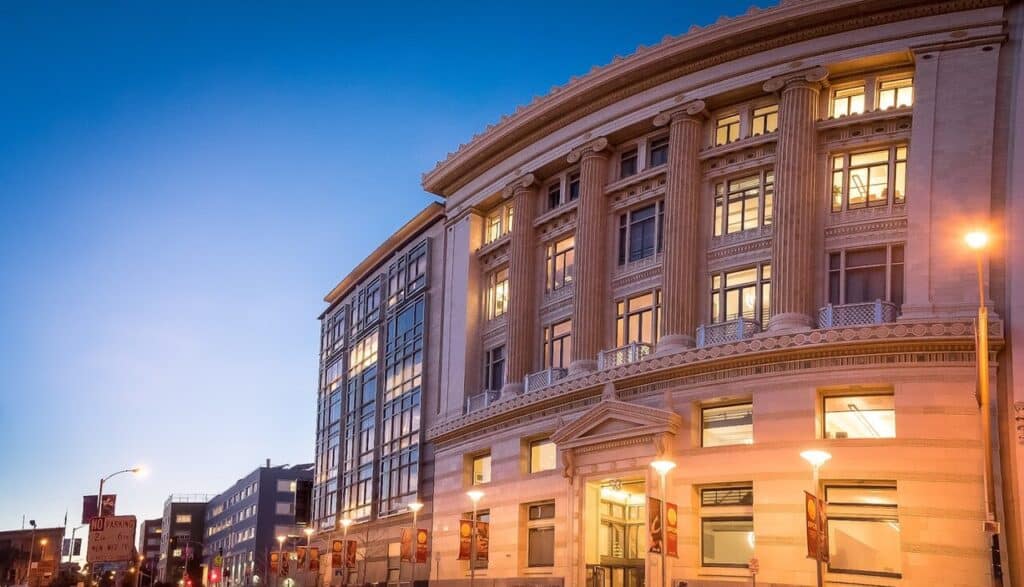
Bridging Composition, Scoring, and 21st-Century Production
The name “conservatory” brings to mind the most traditional of music schools, a place that emphasizes the usual woodwinds and strings and pays only tangential attention to the art of recording.
Not so at the San Francisco Conservatory of Music, which offers a one-of-a-kind hybrid major that mixes music composition and scoring.
SFCM’s music production major tasks its students with the usual projects, including recording performances by the school’s ensembles and soloists. But it also adds projects that you won’t find anywhere else, projects that prepare students for recording and producing music in the 21st century.
Students learn about scoring music for film, television, video games, and other forms of media. They’ll use technology to create sounds that meet the needs of today’s multimedia world.
SFCM students hone these skills in the school’s top-notch recording studios. Studio H, the conservatory’s premiere recording space.
In addition to digital Avid S6 and analog API 1608-II consoles, which connect directly to every performance hall in the building, Studio H also features a Meyer Sound 7.1.4 Dolby Atmos monitoring system.
Application Deadline
The final deadline at San Francisco Conservatory of Music is December 1st for all programs. While they occasionally allow an extension, I wouldn’t risk it, as it’s best to get in your portfolio by this deadline.
San Diego State University
San Diego, CA
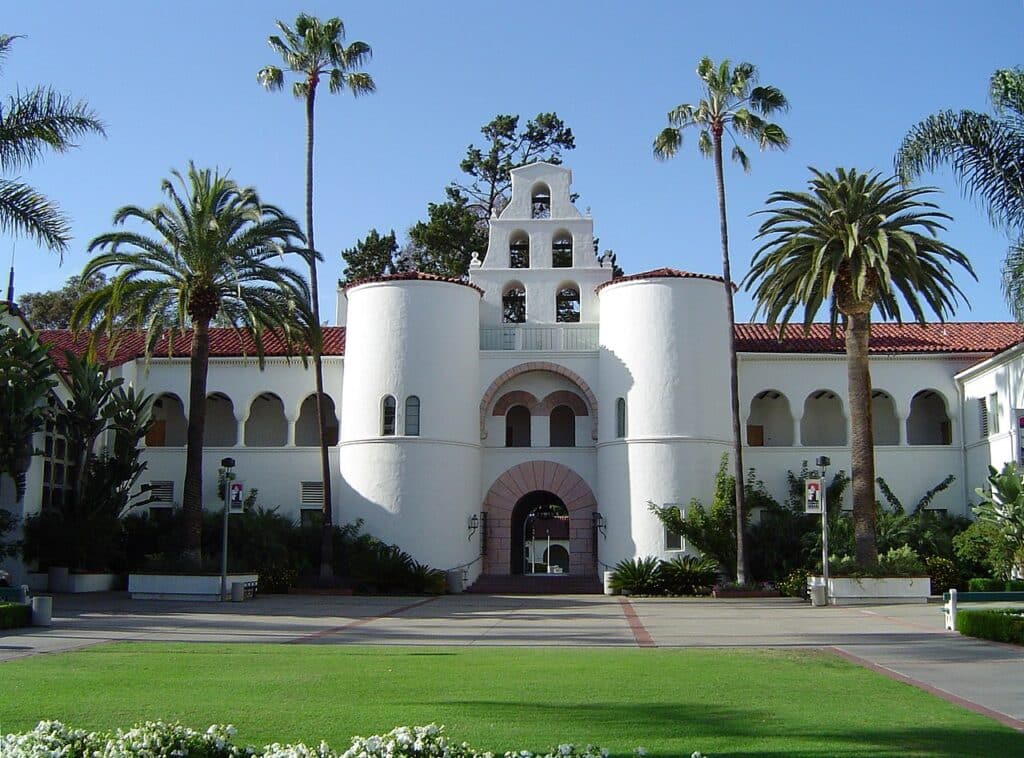
The All-Purpose Music Recording Technology Program
San Diego State University describes its Music Recording Technology and Audio Design (MRTAD) program as a “Swiss Army Knife” degree.
In other words, students who earn an MRTAD are ready to handle any type of situation thrown at them. To that end, the program includes classes in web design, art, and musical theater, along with courses devoted to specific recording equipment.
San Diego State gives MRTAD students plenty of opportunities to practice recording and producing, as the school hosts more than 150 performances each year. These range from concerts by the university’s various ensembles to visiting artists.
Students will study from the faculty members, that includes innovators like Chris Warren, the producer of EchoThief. A collection of sonic snippets from around the world, EchoThief has been used not only in museum exhibits but also in video games such as Wolfenstein II: The New Colossus.
In addition to teaching at San Diego State, Isaac Muñoz serves as an engineer on Qualcomm’s research and development team. There, he creates prototype microphones, developing real-world knowledge he passes on to his students.
Admission Requirements
Students applying to the SDSU music technology program will need several items in their portfolio, including:
- Three recommendation letters, and these should be from actual musicians who can speak to your musicianship or production abilities
- Three-page essay on your musical goals
- Audio recordings of your work
- Performance video, showcasing your ability to play music or a musical instrument
Application Deadline
SDSU has an application deadline of February 1st each year for its music program.
University of California, San Diego
San Diego, CA
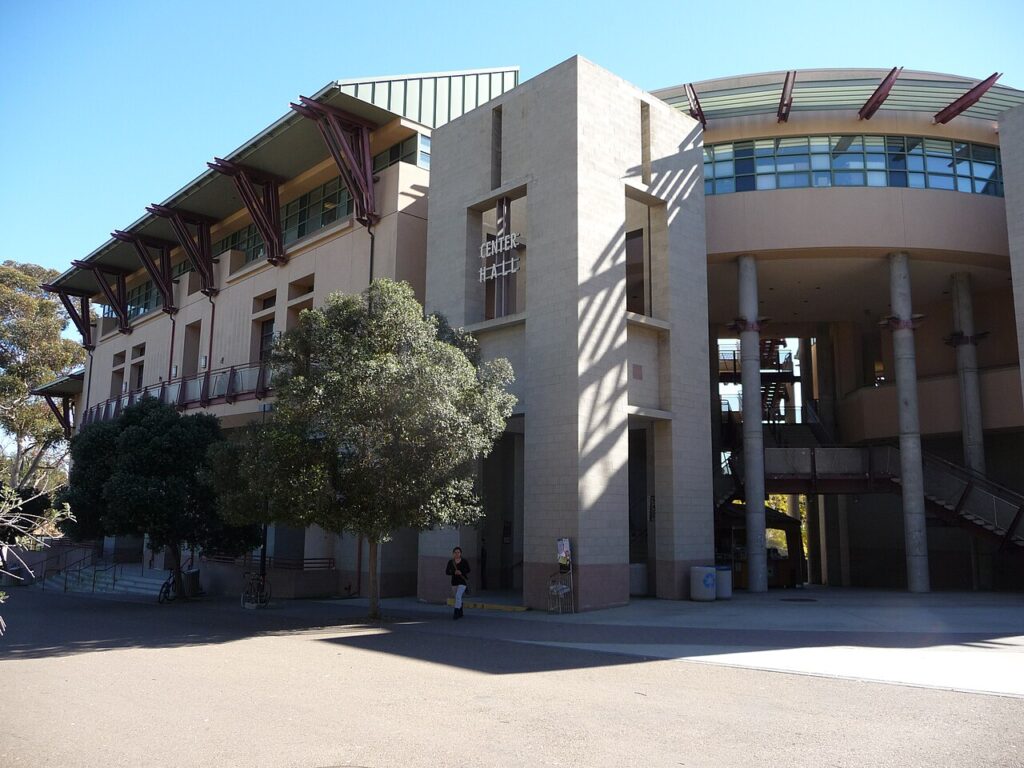
Where Computer Science Meets Music Production
As this shows, schools have some pretty unique names for their recording and producing degrees. The University of California, San Diego might have the most unusual of the bunch, dubbing their program “Interdisciplinary Computing and the Arts Major – Computer Music and Music Technology.”
For those who just want to play with knobs and sliders, UCSD’s wordy title might be a disappointment. But for those who want every possible tool to help them create music, the title is a good sign. As the title suggests, UCSD understands that producing and engineering requires both musical skills and a mastery of computers.
Like most schools, UCSD gives students the opportunity to record performances by student musicians and visiting acts. However, more ambitious students can take advantage of resources such as the MAVERiC Studio.
The Mixed Augmented Virtual Extended Reality Innovation Center (MAVERiC) Studio uses 3D modeling software and virtual reality environments to create immersive art works, the perfect place for future producers to blend their love of music and computer technology.
Application Deadline
The deadline for applying to any UC school, including UC San Diego, is typically December 1st.
Loyola Marymount University
Los Angeles, CA
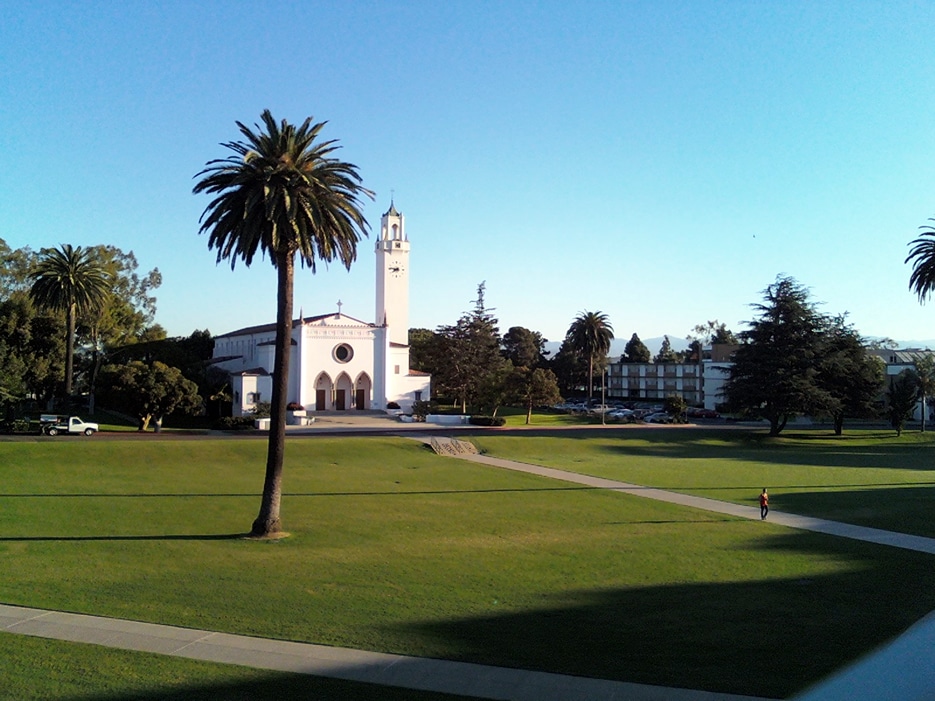
Two Pathways for Music Producers
Loyola Marymount actually offers two programs that can work for aspiring music producers.
One program is called “Recording Arts,” and one of my students was recently accepted into it. This program focuses on students getting into a career in audio engineering.
Alumni of the program have impressive accomplishments; one engineer, who graduated in 2007, has won multiple Grammy Awards for his music production and engineering on Adele’s music.
Another program at LMU, called “Contemporary Styles and Practices,” focuses more on the creative aspects of creating music, such as songwriting and film scoring.
You can’t go wrong with either.
LMU also has a strong filmmaking program, making it ideal for people who want to collaborate across multimedia disciplines.
Application Deadline
LMU actually has two deadlines.
I strongly recommend applying via early action, which has a November 1st deadline. Early action tends to be more favorable for admission than regular action, and acceptance rates are higher.
Otherwise, if you apply for the regular action deadline, it is January 15th.
Los Angeles College of Music
Pasadena, CA
Mentorship with Music Production Industry Leaders
Certainly, I think the Los Angeles College of Music can be a great choice for young producers.
But you don’t have to take my word for it. None other than Billboard Magazine, still the leader in the music industry, listed LACM in its own list of the best schools for the music business.
It’s easy to see why LACM caught Billboard’s attention. The college melds technological excellence with the fundamentals of song craft, teaching students to see themselves as composers and musicians who help bring a piece to life.
Faculty at LACM includes working professionals who have contributed to songs that are still stuck in music lovers’ heads.
In addition to composing tracks heard on The Bachelor, The Sopranos, and other TV hits, Mark Browne has played with and recorded a list of artists that reads like an entry in the Rock and Roll Hall of Fame, including George Michael, Billy Idol, and Dolly Parton.
Portfolio Is at the Center of Admission
Los Angeles College of Music has more relaxed requirements for admission, not expecting high grades or standardized test scores.
Instead, LACM prioritizes your portfolio; you have to submit three original productions with your application, along with an explanation of how you went about producing that music.
There is no formal performance audition at LACM, unlike at some other muic production schools; it comes down to your portfolio mostly.
Application Deadline
Los Angeles College of Music has a later application deadline of February 15th.
Should You Attend a Music Production School in California?

First, Consider Your Priorities
If you are looking for the best connections, then probably being in Los Angeles or SF makes a lot of sense. Schools like USC, San Francisco Conservatory, and Loyola Marymount could make a lot of sense here.
If you’re an experimental artist who wants to make original music, CalArts’ Expop program is likely an excellent option for you to consider.
If you value versatility but still want to be in an active city, San Diego State’s “Swiss Army Knife” MRTAD program makes a lot of sense.
The Application Timeline Starts Now
Most of these programs have deadlines between November and January, with portfolio or audition requirements that demand months of preparation.
Start building your production portfolio now…
Record and mix original tracks. Document your studio sessions. Prepare your artist statement and production philosophy.
The students who get into these competitive programs don’t wait until senior year—they begin building their portfolios junior year or earlier.
Get Expert Help With Your Music Production Applications
I have helped dozens of music production students get into colleges in California, as well as selective programs throughout the entire country.
If you are looking for guidance on your portfolio, essays, and simply choosing your “best-fit” options, we’re here to help. Reach out today to schedule a free consultation, and let’s talk about how to make your application stand out.