

On the East Coast, the best universities for music production include New York University, Northeastern University, the University of Miami, Drexel University, and Elon University, each offering strong industry ties and hands-on opportunities.
In the Midwest, the University of Michigan and Indiana University are excellent options for students seeking both a traditional campus experience with top-tier music resources.
On the West Coast, the University of Southern California is widely regarded as a premier destination for music production, although it is unbelievably selective.
For conservatory training, the Peabody Institute of Johns Hopkins University and Berklee College of Music deliver an excellent education designed for students pursuing highly specialized careers in audio engineering and music technology.
I have helped music production students get accepted to all of the schools above, plus many others, and I’ll share some insight into what makes each school unique and how to stand out when you apply.
University of Southern California Thornton School of Music
Los Angeles, California
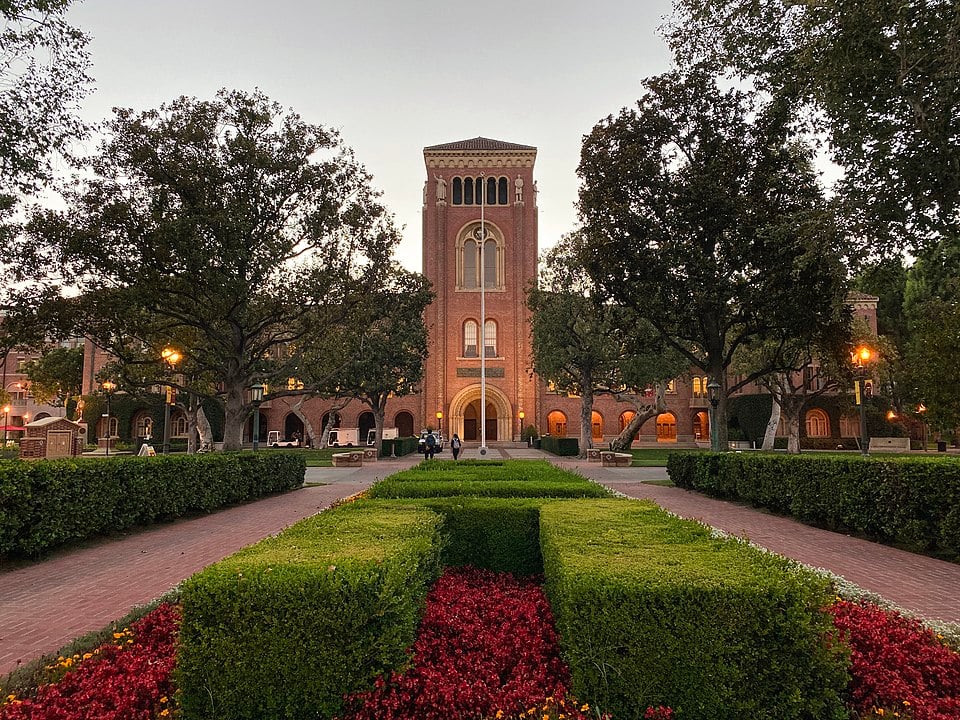
The Most Selective Music Production Program in the United States
USC Thornton’s music production major is widely regarded as the most competitive undergraduate program of its kind. Admission rates are extremely low, often below 10 percent, and only highly accomplished applicants tend to gain admission in my experience.
One factor that makes USC so powerful is its location in Los Angeles. Students are surrounded by major studios, film scoring opportunities, record labels, and industry professionals from the moment they arrive.
Who This Program Is For
In my experience, USC is best for producers with very advanced skills + years of training. I had a student recently accepted into my class of 2025, and he had been songwriting & creating music for over half a decade.
Successful applicants, like the student of mine who was accepted, typically demonstrate strong proficiency with digital audio workstations, microphone techniques, and music software (such as Ableton, iZotope, etc.).
There is a place for you to explain how you went about creating your portfolio in your application for USC. You must clearly articulate how your recordings were created, and your role in producing those recordings.
Who It’s Not For
Students just beginning their production journey will probably struggle here, as it tends to be best for more advanced students.
USC also expects strong academic performance alongside artistic ability, so make sure to keep up strong grades throughout high school.
Application Deadline
December 1. This deadline is strict and earlier than the university’s general admission deadline for non-music students.
Peabody Institute of Johns Hopkins University
Baltimore, Maryland
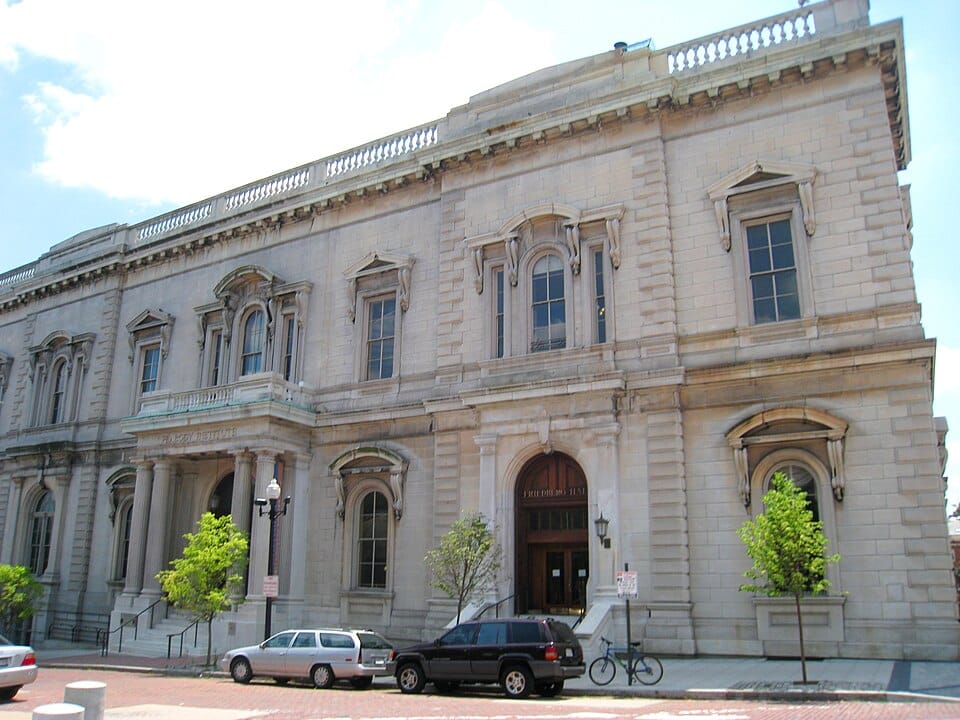
A Conservatory Focused on Deep Musical Immersion
Peabody offers several pathways for producers, including Recording Arts and Sciences, Computer Music, and even Hip Hop studies.
Although it is part of Johns Hopkins University, Peabody functions as its own conservatory environment with a strong artistic focus.
Graduates of Peabody have gone on to work alongside global stars such as Joss Stone, Bon Jovi, and Paul Simon, while others now serve as broadcasting and recording technicians at organizations including NPR.
Who This Program Is For
This path is ideal for students ready to fully commit to music production without pursuing a double major in an academic subject.
Those who do want to double major must submit a separate application to Johns Hopkins University through the Common Application.
Students studying performance also have the option to add Recording Arts and Sciences as a concentration, making this major accessible even to students prioritizing other musical passions.
Who It’s Not For
Those seeking a typical college experience with major sports, Greek life, or extensive non-music offerings may find Peabody not what they are looking for. One thing to consider is that Peabody’s location is 3 miles from JHU’s Homewood Campus, or the campus center of Johns Hopkins University proper.
Application Deadline
December 1 is the final application deadline.
Berklee College of Music
Boston, Massachusetts

The Largest Contemporary Music School in the World
Berklee is a global hub for modern music production. With thousands of students, the opportunities to produce music in virtually any genre you could desire are unmatched. Programs include Music Production and Engineering, Electronic Production and Design, and Independent Recording and Production.
Many of today’s successful producers, composers, and engineers were trained here, including musical icon Charlie Puth.
Who This Program Is For
Students who want the absolute best in recording facilities to produce music. Berklee has an impressive 37 recording facilities, which is 36 more than most music schools in the US!
Berklee is PERFECT for performing musicians who want to produce music within a vibrant community of collaborators. Almost every Berklee student is an active performer, which means endless opportunities to record live projects with other musicians.
Who It’s Not For
Applicants who do not play an instrument at an audition level should consider other programs. Performance ability is required for admission, unless you are going for the BA in music industry leadership and innovation.
Application Deadlines
November 1 for Early Action
January 15 for Final Deadline
I typically suggest applying through Early Action to show strong interest and get your admission decision sooner.
There is also a summer audition if you attend their Berklee Aspire 5-week program going into your senior year.
New York University
New York, New York

Two Distinct Routes into the Production World
NYU offers both the Clive Davis Institute of Recorded Music and the Steinhardt Music Technology program. These two paths differ significantly in focus.
Clive Davis emphasizes contemporary music creation, performance, and business skills, which differentiates it from some other music production programs that are more focused on the “technical” side of music production.
The acceptance rate for the Clive Davis program sits around 10 percent.
Clive Davis Institute emphasizes hands-on learning, requiring all Recorded Music majors to earn credits through industry work experience and community service–based placements.
Steinhardt, on the other hand, leans toward technical production, engineering, and emerging audio technologies.
A highlight of the Steinhardt program is the opportunity to spend a semester studying in Prague or Paris. Before graduating, students also complete an internship at a major recording studio or a renowned concert venue. Past students have interned at Radio City Music Hall, Sony, and other iconic companies.
Who This Program Is For
Clive Davis is ideal for artists, musicians, or business aspirants who want a holistic education in production, songwriting, and entrepreneurship.
Steinhardt suits students interested in technical careers such as sound design, audio research or studio engineering.
Who It’s Not For
Students with weak academic records may struggle to gain admission, as NYU has high standards of admission even for music students. I have
Application Deadlines
November 1 for Early Decision I
January 1 for Early Decision II
January 5 for Regular Decision
I suggest applying early to significantly improve acceptance odds.
University of Miami Frost School of Music
Coral Gables, Florida

Contemporary Music Training with Strong Technical Depth
Frost offers multiple production-related tracks, including Media Scoring and Production, Music Engineering Technology, and Audio Technology.
Students at the Frost School of Music benefit from the renovated Weeks Recording Studio, the first facility in the world to feature three full-size consoles within a single central control room. The Music Engineering Technology Department is led by accomplished faculty such as Dana Salminen, whose credits include work with artists like Sting, Pitbull, and Flo Rida.
The University of Miami also holds the distinction of being the first U.S. university to offer a four-year undergraduate degree in Music Engineering.
The program stands out for its blend of artistic collaboration and rigorous technical education.
Who This Program Is For
Students seeking a contemporary music environment with access to performers across many genres. The Music Engineering Technology track is especially appealing to those interested in the STEM side of recording, as students in that major must also complete an electrical engineering minor.
However, do note that everyone in the music engineering technology program and the media scoring majors must complete a performance audition as part of the admissions process.
Who It’s Not For
If you’re not already a performer, don’t apply for Media Scoring or Music Engineering Technology, because those require performance auditions.
Instead, apply to the audio technology major, which does not require an audition.
Applicants with lower GPAs, especially below 3.0, face a difficult admission process.
Application Deadlines
November 1 for Early Action
December 1 for Regular Deadline
As always, early application can improve admission acceptance odds, though UMiami has a history of deferring EA candidates to regular decision.
University of Michigan School of Music, Theatre, and Dance
Ann Arbor, Michigan

Elite Training Within a Classic College Experience
Michigan’s Performing Arts Technology program offers both artistic and technical degree options. Students benefit from world-class facilities while enjoying the full experience of a major public university.
Undergraduates receive strong mentorship and personalized guidance from faculty and peers alike. Notable alumni include artists such as Kelly Moran, a touring pianist and composer with more than 100,000 monthly listeners on Spotify.
Students also have access to advanced facilities such as the Bill Brehm Technology Innovation Suite, which features editing labs, an electronics prototyping workshop, a surround sound control room, and other state of the art resources.
The Bachelor of Science track is ideal for students seeking a stronger focus on STEM coursework.
Who This Program Is For
Students who want strong production training alongside traditional campus life, including athletics, student organizations, and diverse academic offerings.
This is absolutely a PERFECT fit for someone who wants the traditional college experience at a highly-ranked university.
Who It’s Not For
Beginners may find the program demanding. Admitted students usually have years of prior experience.
Also, the UMich School of Music, in general, won’t consider applicants with a high school unweighted GPA below 3.0. So, even if you are an extraordinarily accomplished producer, UMich specifically states the 3.0 cutoff on its website.
Application Deadline
December 1 is the specific deadline for the music program, unlike the parent university’s deadline, which is the following month.
Indiana University Jacobs School of Music
Bloomington, Indiana
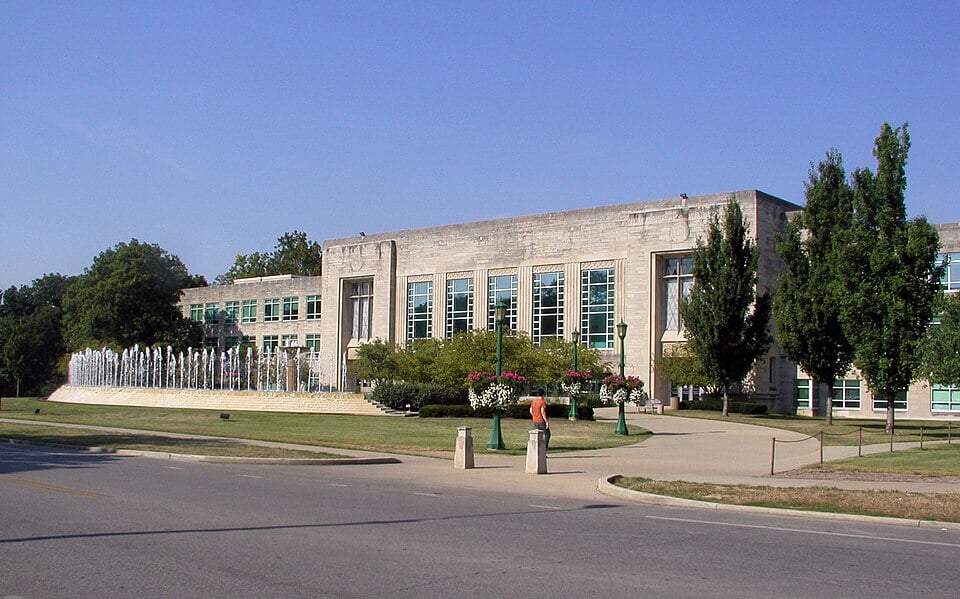
One of the Largest Music Schools in the World
Jacobs offers multiple production-focused tracks, including Creation and Production and Audio Engineering.
The Creation and Production track is designed for students who want to craft original music, with a focus on songwriting, collaboration, and digital audio workstation (DAW) production.
The Audio Engineering track is intended for those interested in the technical side of recording, covering topics from acoustics and physics to hands-on studio training.
Students enrolled at Indiana University Jacobs School of Music benefit from extensive performance opportunities, large-scale productions, and a massive campus community.
Students in the B.S. program accumulate hundreds of hours of hands-on experience, working as assistant and lead engineers, mixers, and production runners for a wide range of campus events. In their fourth year, they complete a capstone internship that can be arranged with organizations anywhere in the United States.
Who This Program Is For
Those who thrive in large environments with abundant collaborators and resources, and who desire the classic college experience.
Unlike UMich, I have seen students be seriously considered (such as being invited to interviews) with GPAs below 3.0.
Who It’s Not For
Students who prefer smaller programs or proximity to major music industry cities may find Bloomington somewhat isolated. Bloomington is a great college town, but doesn’t have the same networking opportunities as New York, Boston, or Los Angeles.
Application Deadline
December 1 is the application deadline for all programs in the Jacobs School of Music, which is where the two music production programs at Indiana University exist.
Drexel University
Philadelphia, Pennsylvania

Built Around Real Industry Experience
Drexel’s cooperative education model requires students to complete professional internships as part of their degree.
The program provides music business offerings, such as the “Mad Dragon” record label.
Drexel’s B.S. in Music Industry equips students for dynamic careers as booking agents, label executives, producers, and entrepreneurs across the music business.
Consistently recognized as one of the country’s top music business programs, Drexel features seasoned faculty such as Program Director Jeff Apruzzese, a former bassist for Passion Pit (a once mega-popular group that still has millions of listeners a month), who has worked alongside legends including Stevie Wonder and Dionne Warwick.
Who This Program Is For
Students who prioritize real-world experience and career readiness before graduation. Drexel is ideal for students seeking an internship experience while they are pursuing their undergraduate education, opening the doors for getting a job in the industry.
Who It’s Not For
Drexel’s music industry major is limited in its performance opportunities compared to Berklee or the University of Miami. For some producers, this is ideal; for others, this is not at all what they want in their undergraduate experience. It’s all about finding what you want to do.
Application Deadlines
November 15 for Early Action or Early Decision
January 15 for Regular Deadline
Elon University
Elon, North Carolina

Strong Facilities with More Accessible Admissions
Elon University offers four concentrations: Music Production, Audio Engineering, Songwriting & Composition, and Music Business.
Elon’s Music Production and Recording Arts program provides a comprehensive education without the extreme selectivity of some top-tier programs.
The program is built on the idea that great producers need both a deep understanding of music’s history and theory and mastery of today’s production technologies.
By blending traditional musical foundations with modern recording techniques and styles, students gain the creative, technical, and critical skills needed to produce professional-quality work. Hands-on experience with current tools and workflows is a central focus.
Who This Program Is For
Students seeking high-quality training in a supportive environment that is still selective but not as ultra-competitive as other programs out there.
It’s also great for producers who prefer a more studious, focused, and smaller environment than a school in a big city, which can be distracting for some students.
Who It’s Not For
It may seem obvious, but it’s the opposite of who this program is for; some students want to immediately be in a large city in college, and if that’s the case with you, Elon may not be ideal.
However, Elon DOES offer a semester- or summer-study-in-LA option, giving students some options here.
Application Deadlines
November 1 for Early Action
January 10 for Regular Deadline
Northeastern University
Boston, Massachusetts

Prestigious Academics with Mandatory Career Experience
Northeastern integrates long-term cooperative placements into its curriculum. Students often work with major arts organizations and media companies while enrolled. These experiences frequently lead to full-time employment after graduation.
Northeastern offers three music technology–focused degrees, which include a B.S. in Music, a B.S. in Computer Science and Music, and a B.S.E.E. in Electrical Engineering and Music.
The B.S. in Music explores the use of digital and analog audio techniques across a wide range of genres and applications. In contrast, the B.S.E.E. program centers on the electronic and technical foundations that support music production, performance, and distribution.
Who This Program Is For
Students who want a highly ranked university combined with structured career preparation and an included co-op program.
It’s also perfect for students who want to combine STEM & music production in an urban university setting.
Application Deadlines
November 1 for Early Action and Early Decision
January 1 for Regular Decision
Frequently Asked Questions About Music Production Programs
It depends on the school. Some colleges, like Berklee and Miami, require a live performance audition. Other schools, like NYU Steinhardt, require a video demonstrating the ability to perform, but it’s not as strict as an actual audition.
Finally, many schools, such as Drexel, require no performance audition at all.
Schools frequently look for both artistic excellence & diversity in a portfolio. If you make original music, it shouldn’t sound like it was made only with stock presets; they want to see originality. Using microphones to capture live sounds, rather than ONLY electronic sounds, is another factor to consider.
We work closely with music production students on helping them develop their portfolios, among other college consulting specialty services. See more here for how we help producers; we’ve helped students get into every school on the above list and more.
Music production opens doors to a wide range of careers, from hands-on creative roles like producing and beatmaking to more technical paths like audio engineering, sound design, and mastering.
There’s also a growing demand for producers in media, with opportunities in film, TV, and game scoring, as well as content creation spaces like podcasting and YouTube tutorials.
Most successful people in the field end up diversifying across several of these areas, building their reputation through a strong portfolio and network rather than formal qualifications.


.jpg)


